

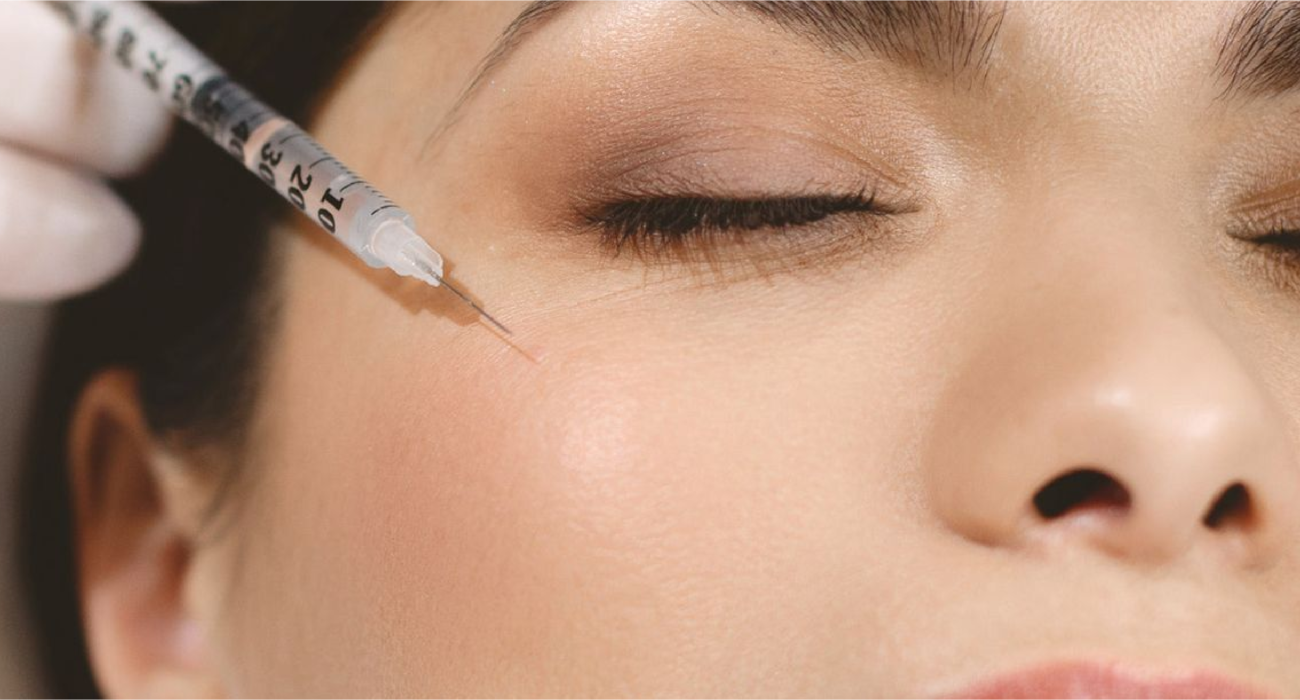
The vocabulary of aesthetic medicine is changing. Patients are no longer walking into clinics asking to look younger — they are asking to look better. They want skin that glows, pores that are barely visible, and a face that reads as rested rather than worked on. This cultural shift away from the “frozen” or “overdone” look has given rise to a new generation of hybrid treatments, and Mesotox sits firmly at the forefront of that movement.
Often called Micro-Botox or Glass Skin Botox, Mesotox is a nuanced procedure that borrows the active ingredient from traditional neurotoxin therapy — Botulinum Toxin Type A — but deploys it in an entirely different way, targeting the skin itself rather than the underlying muscle. The result is a subtler, more intrinsic improvement: refined texture, reduced pores, controlled oil production, and a luminous, almost poreless finish — all while leaving facial movement completely intact.
What is Mesotox?
Mesotox is a specialized cosmetic procedure in which highly diluted Botulinum Toxin Type A — commercially available as Botox, Dysport, or Xeomin — is microinjected into the dermis, the deeper structural layer of the skin, rather than into the muscles that lie beneath it. This single distinction separates it fundamentally from conventional neurotoxin therapy.
Standard botox injections are designed to temporarily paralyze targeted muscles and smooth dynamic expression lines such as frown lines, forehead creases, and crow’s feet. Mesotox, by contrast, works on the skin’s architecture — its glands, microvasculature, and surface tension — without interfering with muscle function at all. Patients can smile, frown, and express themselves fully while still enjoying visibly improved skin quality.
To further enhance its effects, the diluted toxin is often blended into a customized solution — sometimes referred to as a meso-cocktail — that also contains non-crosslinked hyaluronic acid, vitamins, peptides, and antioxidants, creating a comprehensive skin rejuvenation treatment in a single session.
The composition: what goes into a meso-cocktail?
The efficacy of Mesotox is closely tied to the quality and customization of its formulation. While the exact composition is tailored to each patient’s skin type, concerns, and goals, the core components typically include:
- Botulinum Toxin Type A: The primary active ingredient, used at a significantly higher dilution than standard aesthetic doses to preserve muscle function while still acting on dermal structures.
- Non-crosslinked hyaluronic acid: Provides immediate surface hydration and a gentle plumping effect without adding volume in the way a traditional filler would.
- Micronutrients: A blend of Vitamin C, B-complex vitamins, and glutathione to brighten the complexion and neutralize oxidative stress.
- Biomimetic peptides: Signal molecules that stimulate the skin’s own production of collagen and elastin, supporting long-term structural improvement.
How does Mesotox work?
Mesotox exerts its effects through several distinct physiological pathways, all occurring within the dermal layer:
- Appendage control: When the diluted toxin infiltrates the dermis, it acts on the arrector pili muscles responsible for pore size, as well as the sebaceous and sweat glands. By blocking the release of acetylcholine — the neurotransmitter that triggers these glands — it reduces oil and sweat production, leading to a noticeably mattified, smoother complexion.
- Microvascular modulation: The toxin can dampen superficial flushing responses by calming the tiny blood vessels within the dermis, contributing to a more even and consistent skin tone.
- Dermal lifting: The superficial placement of the solution creates a mild tensioning effect on the skin’s surface, smoothing out fine crepey lines — particularly around the eyes, neck, and jawline — without restricting muscle movement.
Because Mesotox targets the dermis rather than deeper muscles, it is especially effective for areas that conventional botox cannot adequately address — such as the delicate skin under the eyes, along the sides of the nose, and across the neck.
Aesthetic benefits
Mesotox delivers a range of cosmetic improvements that have made it particularly popular among patients seeking a natural, camera-ready finish:
- The glass skin effect: By minimizing pore size and reducing sebum production, the skin develops a smooth, light-reflecting quality that patients describe as a “filtered” appearance in real life.
- Fine line refinement: It is exceptionally effective for fine surface lines — crinkles under the eyes, horizontal neck lines, and perioral lines — that do not respond well to standard muscle-based injections.
- Acne and oily skin management: By suppressing overactive sebaceous glands, Mesotox serves as a powerful adjunct treatment for patients struggling with chronic oiliness, enlarged pores, and recurrent breakouts.
Medical applications
Beyond aesthetics, Mesotox has demonstrated significant clinical utility in the management of several dermatological conditions:
- Hyperhidrosis (excessive sweating): Mesotox is an established treatment for focal hyperhidrosis affecting the face, palms, and underarms, offering patients a reliable and minimally invasive solution.
- Rosacea management: Recent clinical observations indicate that Mesotox can meaningfully reduce the persistent redness and flushing associated with rosacea by modulating the neurovascular response within the skin — a benefit that standard topical treatments rarely achieve.
- Scar and texture improvement: The treatment is increasingly used in scar management protocols, particularly for hypertrophic scars, where reducing dermal tension during the healing phase can significantly improve the final cosmetic outcome.
Futher More You can Read About : What is PDRN? The Complete Guide
Who is a good candidate?
Mesotox is well-suited for adults across a broad age range who wish to improve overall skin quality rather than address specific structural concerns. It is particularly beneficial for those with oily or acne-prone skin, early signs of aging such as fine surface lines and loss of radiance, visible pores, rosacea, or focal hyperhidrosis. It is not designed to replace deeper volumizing treatments or surgical interventions, but rather to complement them — optimizing the skin’s surface while other modalities address deeper structural concerns.
What to expect
A typical Mesotox session involves multiple superficial microinjections across the treatment area, usually completed within 30 to 45 minutes. Mild redness or pinpoint swelling may occur immediately after but generally resolves within a few hours. Results become noticeable within five to seven days and typically last between three and six months, depending on the patient’s skin type, lifestyle, and the specific formulation used. Most practitioners recommend a course of two to three initial sessions followed by periodic maintenance treatments.
Conclusion
Mesotox represents a meaningful evolution in how we approach skin health within aesthetic medicine. Rather than reshaping or volumizing, it focuses on refining — improving the skin’s quality, tone, and texture from within the dermis itself. By delivering neurotoxins to the skin rather than the muscle, it offers patients a genuinely natural result: a face that looks hydrated, clear, and luminous while remaining entirely expressive.
As the field continues to embrace the philosophy of prejuvenation — treating skin proactively rather than reactively — Mesotox stands out as one of the most versatile and clinically meaningful tools available to both dermatologists and aesthetic practitioners.